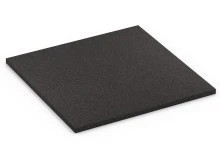
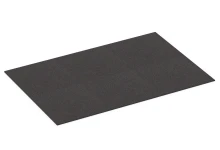
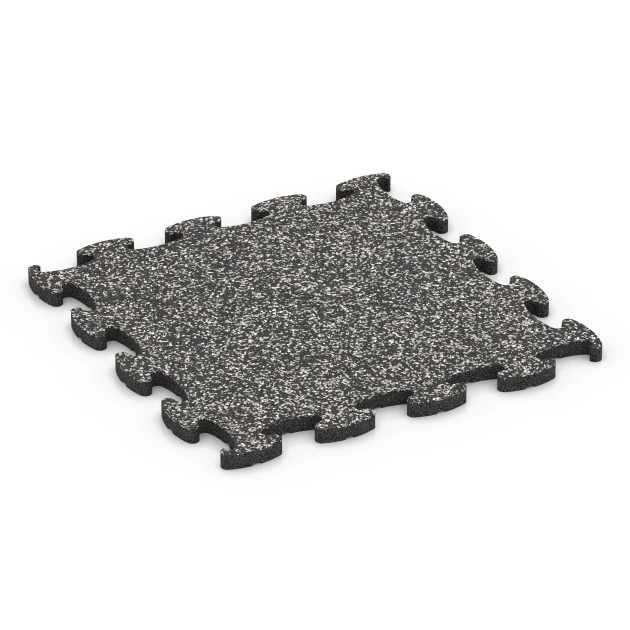
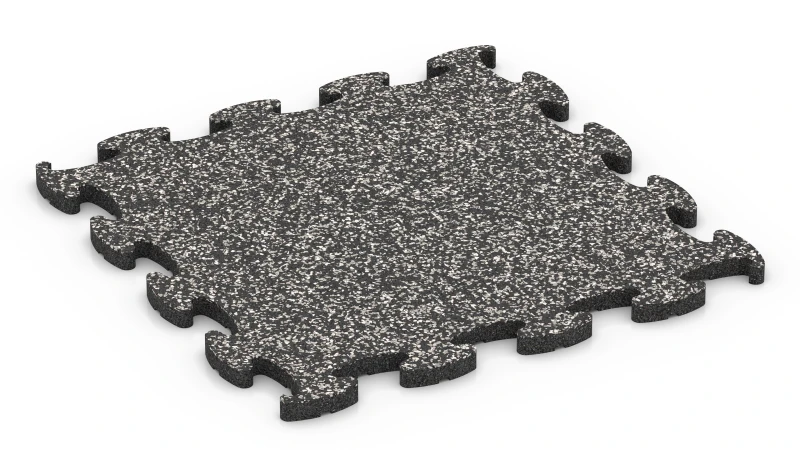
Dog Agility Flooring Max XT "Dark grey granite"
- /
-
Ready to ship
in approx. 3-4 weeks – production yet to start - £77.89 / 5.03 Piece / m²
- (3.65 kg / Piece)
EAN: 4251469368958 | Item no.: 6895
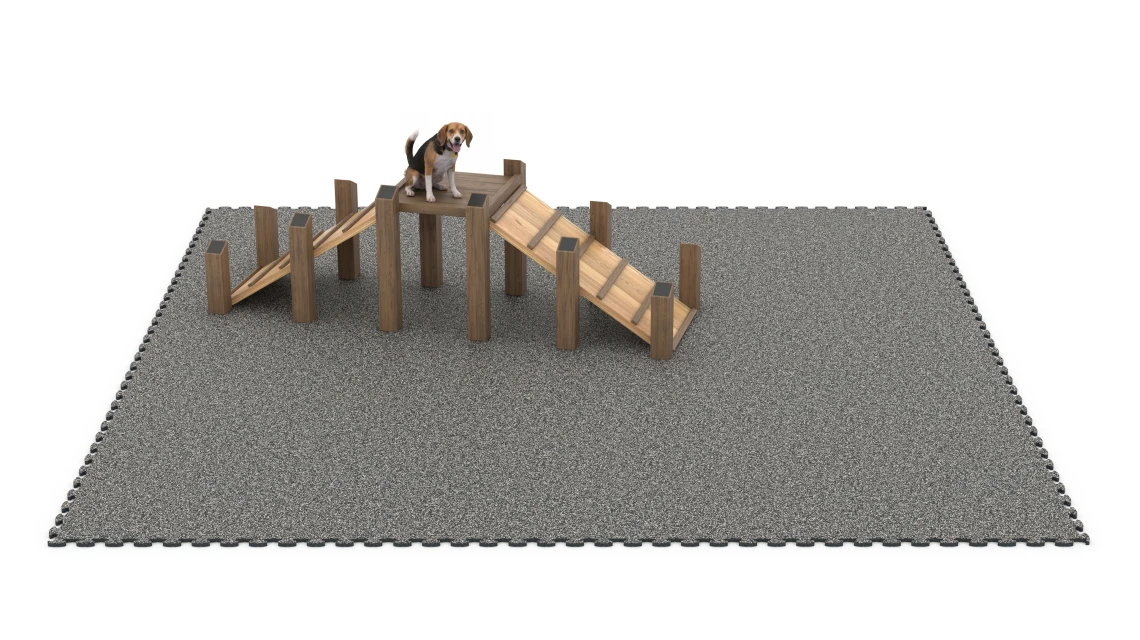
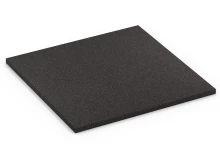
Dog Agility Flooring Max is made from precision-cut tiles that are 1.8 cm thick and have a wearing layer made from through-coloured EPDM rubber granules. The tiles fit together so closely at the tight joints that individual tiles are barely discernible across the surface. The result is a virtually seamless appearance. The flooring is slip-resistant, abrasion-resistant, durable and colourfast, making it suitable for dog agility centres, dog training centres and areas of the home used by dogs.
How much grip does the flooring provide in dog agility centres and homes?
During agility, a dog accelerates, changes direction in an instant, jumps and lands. Paws and claws get good purchase on the grippy surface. The resilient flooring cushions impact forces from jumps and landings, helping to protect paws and joints. In the home, it is particularly helpful for older dogs that can easily slip on smooth tiles or parquet flooring. When a dog lies down, the flooring protects it against cold rising from the substrate.
What is Dog Agility Flooring Max made from?
The wearing layer is made from newly manufactured, through-coloured EPDM rubber granules. This means the tiles retain their colour even under intensive use. Its densely pressed structure makes the wearing layer abrasion-resistant and easy to clean. The tile body is made from recycled tyre rubber granules (ELT). Pressure from obstacles, equipment and furniture does not generally leave permanent indentations. Freshly unpacked tiles may initially smell of rubber. With good ventilation, the smell fades over time.
How is Dog Agility Flooring Max laid?
Dog Agility Flooring Max is loose laid, simply placed in position without drilling, gluing or screwing. Suitable substrates include screed, tiles, timber floors and existing hall floors. The substrate must remain load-bearing, stable and reasonably level. The rounded jigsaw interlock connects the tiles firmly, preventing edges from lifting. At the edges, the tiles can be cut to size with a jigsaw or circular saw. Dog Agility Flooring Max is intended for indoor and covered areas, and for use as portable flooring for training and competitions.
How easy is Dog Agility Flooring Max to maintain?
Everyday cleaning simply requires sweeping or vacuuming the flooring. Warm water with a pH-neutral cleaner removes stubborn dirt. When required, the tiles can also be wiped with alcohol-based disinfectants.
Can the tiles be cut to size?
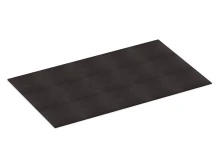
For an extra charge, WARCO supplies tiles cut precisely to fit the planned area and ready to lay. On site, they only need to be placed in the intended order. Additional Type XX functional tiles can be used to further optimise the overall build-up height and improve impact cushioning.


Discount
Product Highlights
Characteristics
Product Details – Material and Structure


Comparative values
Rubber mats made from PU-bound rubber granules can have a characteristic rubber smell, particularly when new. Whether and how strongly it is noticed depends on the material composition and on individual sensitivity to odours.
With WARCO rubber coverings, the inherent smell decreases over time. On well-ventilated outdoor areas such as balconies and terraces, it dissipates quickly. Heat may temporarily make the smell more noticeable.
The smell can remain noticeable for longer in indoor areas, conservatories and other poorly ventilated spaces where ventilation is limited. To reduce the initial inherent smell, rubber tiles may be stored for several days before installation in a dry, well-ventilated place. During storage, air should reach as many tile surfaces as possible.
After installation, regular brief periods of thorough ventilation or cross-ventilation support air exchange. With correct use, no adverse health effects from WARCO rubber coverings are known.
Rubber tiles and rubber mats from WARCO are not harmful to health when used as intended. They are made from rubber granules bound with PU; the solvent-free PU binder cures fully during manufacture.
The rubber granules are predominantly recycled from end-of-life tyres (ELTs). The PAH content of ELT rubber granules may vary according to origin and batch; PAH means polycyclic aromatic hydrocarbons. Black ELT rubber granules contain carbon black, a fine industrial soot that gives the rubber its black colour. Surface abrasion may occur during use of rubber mats.
In two-layer versions, the wearing layer is made from newly manufactured EPDM, which is coloured throughout and free from harmful substances. The possible PAH variations associated with ELT rubber granules do not occur with EPDM. Versions with an EPDM wearing layer are particularly suitable for prolonged or intensive skin contact and for areas intended for babies. The relevant product description states whether a product has a two-layer construction.
A calibrated puzzle interlock without a bevelled edge is produced by cutting each rubber tile precisely to size from a larger blank. The blank is left to cure for several days before cutting.
Without a bevelled edge means that the tile edges are vertical rather than chamfered. The finished tile has only a minimal height tolerance.
In the usual pressing process, a rubber tile receives a bevelled edge, causing each joint to appear as a dark line across the surface. With vertical edges and minimal height tolerance, the tiles butt together accurately, leaving only a hairline joint. This hairline joint is visible in the laid surface only on close inspection, so the floor covering appears almost seamless.
Where rubber tiles are laid in several layers, the load-bearing capacity, shock absorption and overall thickness of the floor can be tailored to the intended use. The XT surface tile forms the top, visible layer and determines abrasion resistance. One or more XX functional tiles sit beneath it. Both XT surface tiles and XX functional tiles are made from PU-bound rubber granules and are available in a range of thicknesses and densities.
The choice and combination of the two tile types sets the overall thickness, load-bearing capacity and shock absorption of the system, allowing it to be tailored to the application. Systems of the same overall thickness can offer different levels of shock absorption. In playgrounds, a system designed for shock absorption can offer a higher critical fall height.
In weight-training areas, a shock-absorbing system can dissipate some of the impact energy. Indoors, it can improve impact sound insulation and reduce the transmission of structure-borne sound. It can also improve vibration damping beneath machinery and plant, or in vibration-sensitive areas.
In normal use, furniture leaves no visible pressure marks or impressions on rubber tiles, provided the product description specifies that the covering is suitable for furniture and equipment. This includes patio tiles, balcony tiles, fitness tiles and floor coverings for trade fair and exhibition areas. Plant containers and training equipment may also stand on these surfaces.
The decisive factor is the point load, that is the weight in relation to the contact area of the furniture feet. Broad feet distribute the load, while very narrow feet concentrate the same weight over a small area. Patio and balcony tiles also accommodate the concentrated loading created by shoes with high heels. Tables and chairs of conventional design are therefore unlikely to leave marks. The limit is only approached by an exceptionally narrow metal foot carrying a high load.
Compressive strength is assessed under BS 7188. A force of 1000 newtons is applied to a test piece with a contact area of one square centimetre, equivalent to the weight of about 105 kilograms. Residual indentation is measured 24 hours after the load is removed. For patio and balcony tiles it is less than one millimetre. The corresponding rating appears in the technical data. The higher the rating, the smaller the residual indentation.
Thermal insulation from floor coverings made from rubber granules is supplementary and varies with the product design and thickness; it does not replace the thermal insulation required within the building structure. Across the WARCO range, thermal conductivity is approximately 0.07 to 0.16 W/(m·K), depending on the product line. By comparison, EPS insulation materials achieve approximately 0.032 to 0.040 W/(m·K), so they provide substantially greater insulation than floor coverings made from rubber granules at the same thickness.
Thermal conductivity and thickness determine the thermal resistance of a floor covering: lower thermal conductivity produces greater thermal resistance, as does a thicker covering. On a cool mineral substrate, a dry covering made from rubber granules draws heat from the foot more slowly and therefore feels less cold. With porous outdoor coverings, thermal insulation decreases when wet because water conducts heat more readily than the air within the pores.
For the thermal insulation of flat roofs and ceilings, the performance of the complete roof or ceiling build-up is decisive. With underfloor heating, the thermal resistance of the covering slows heat output into the room; the thicker the floor covering, the greater this slowing effect.
Impact-absorbing flooring made from PU-bound rubber granules reduces impact sound and the structure-borne sound it generates. The elastic floor covering absorbs impacts and reduces their transfer to the substrate.
Impact sound occurs when walking, jumping, moving furniture or setting down weights cause a floor or storey slab to vibrate. These vibrations travel through solid building components as structure-borne sound and can become audible as airborne sound in other rooms.
Structure-borne sound can also be caused by machinery and by installations fixed to the building. It may have causes and transmission paths other than impact sound, so it cannot be reduced by a floor covering alone.
Under load, a floor covering made from rubber granules deforms elastically. This deformation transfers the load to the substrate less abruptly, reduces the peak force and, through the covering’s internal damping, further weakens the remaining vibrations.
Sound-insulation tiles reduce excitation of the substrate from footsteps, jumps and impacting objects. Where higher requirements apply, multi-layer flooring systems with functional layers of differing elasticity can further reduce impact transmission. Their effectiveness depends on the properties of each layer, the load applied, and the existing floor or slab structure.
Rubber mats can be laid over underfloor heating. Mats made from rubber granules increase the thermal resistance of the floor build-up, so heat from the system passes through the covering more slowly. The thicker the mats, the more pronounced this effect becomes; the heat is not lost, but released into the room later.
Underfloor heating systems already respond slowly and are designed for steady operation. During normal operation, the delay caused by rubber mats is barely noticeable, although it takes longer for the new target room temperature to be reached after an adjustment to the setting.
Indoor dog sports flooring is a resilient surface made from PU-bonded rubber granules and installed in venues where dogs train and compete. Its fine-textured surface provides good grip, withstands wear from claws and helps dogs keep their footing when stopping and turning without abrading their paws.
The PU-bonded rubber granules cushion the impact of take-off and landing, reducing strain on the joints. Versions made from rubber granules recycled from end-of-life tyres (ELT) are available without a top layer or with an EPDM top layer, in a range of thicknesses and build-ups.
Before fitting rubber flooring indoors, the tiles should be cleaned, dried completely and aired. The substrate must be level, load-bearing, clean and dry.
New tiles made from rubber granules may carry residues of manufacturing release agents and fine rubber dust. Before installation, it is advisable to clean the tiles outdoors with warm water; a mildly acidic cleaner suitable for rubber and a scrubbing brush can assist with cleaning. A pressure washer may be used from a sufficient distance. The tiles must then dry completely.
If cleaning before installation is not possible, the residues can be removed after fitting by repeatedly damp-mopping with warm water. New tiles have a characteristic odour which decreases over time; airing them outdoors for several days and regularly ventilating the room during the first few weeks will help it dissipate more quickly.
Before installation, the tiles should have reached room temperature. The installation instructions for the relevant product and installation system must be followed.
The appropriate cleaning method for rubber tiles within buildings depends on the area in which they are used and the surface texture.
In private homes, rubber brooms, vacuum cleaners or mops are usually sufficient for regular maintenance. A neutral cleaner suitable for rubber should be used. A mildly acidic cleaner may be used for mineral deposits.
Water-permeable rubber floor coverings must not be flooded where the substrate does not provide suitable drainage.
For larger or commercial areas, a scrubber dryer with a cylindrical brush is recommended. The brush type and contact pressure of the scrubber dryer must be matched to the floor covering.
Within buildings, a pressure washer is only suitable for stables or appropriately equipped halls where adequate drainage is available. It can also remove stubborn dirt from the textured tile surface.
Good design made easy.