
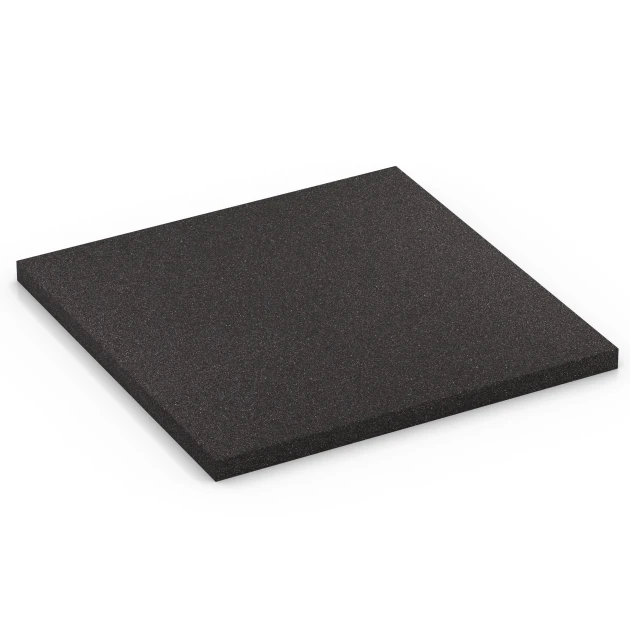
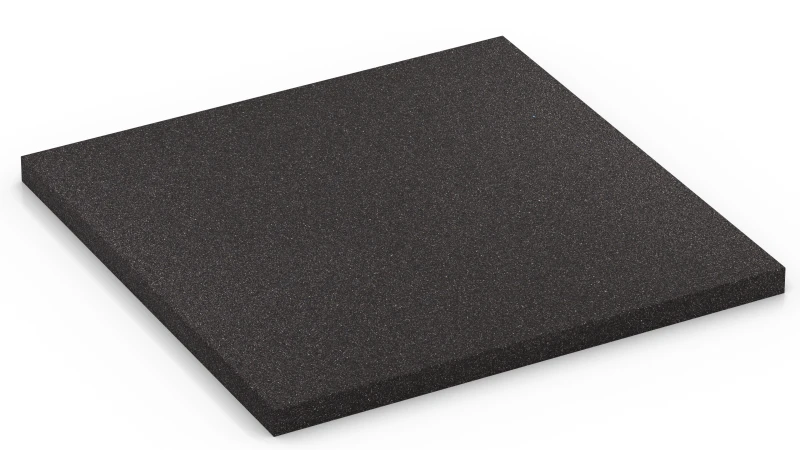
Base Layer Class 2 XX "Anthracite"
- /
-
Ready to ship
from stock in 1-3 days - £39.26 / 3.70 Piece / m²
- (5.84 kg / Piece)
EAN: 4251469364844 | Item no.: 6484
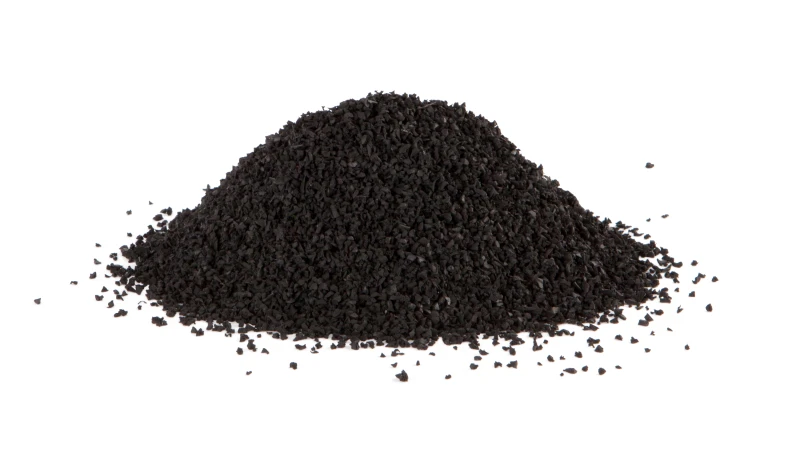
Base layer boards made from rubber granules bonded with polyurethane form part of a multi-layer flooring system and are used in constructions that absorb shock and damp vibration. Each layer in the system has a defined role. The top board forms the wearing surface. The base layer boards beneath it provide vibration and shock absorption, build-up height and load-bearing capacity. Two-layer and multi-layer sandwich constructions are possible. The boards are graded into three damping classes, ranging from very good damping to a stable yet resilient response. Base Layer Class 2 is the intermediate class, where damping and load-bearing capacity are balanced. The board is water permeable, withstands frost and is suitable for indoor and outdoor use.
What does Base Layer Class 2 do?
Base Layer Class 2 takes medium static and dynamic loads, such as those produced by setting down dumbbells, jumping or running. On impact, kinetic energy must be dissipated over the distance through which the board deforms. The board compresses, slows the load and converts some of the energy into heat. The available deflection must match the load. If a layer yields too readily, it reaches the limit of its travel before the load has come to a stop. The board then bottoms out and transfers much higher peak impact forces to the subfloor. Base Layer Class 2 has a density of 800 kg/m³, placing it in the middle range. It yields more under load than Class 1 and therefore provides noticeably better shock absorption. At the same time, it resists compression sufficiently to carry medium loads without bottoming out. This reduces peak impact forces on the screed and structural slab. It also reduces the transmission of impact sound and structure-borne sound.
What is Base Layer Class 2 suitable for?
Base Layer Class 2 is used where medium static and dynamic loads occur and noticeable damping is also required. Typical applications include indoor and outdoor fitness and training areas with dumbbells, cardio equipment and functional training spaces. Base Layer Class 2 is also suitable for areas where impact sound and vibration need to be reduced. Almost all WARCO floor coverings can form the wearing surface. Concrete or natural stone slabs can also be used as the top layer.
Why use several layers rather than one thick board?
Base Layer Class 2 can be combined with base layer boards in Classes 1 and 3. This allows damping and load-bearing capacity to be distributed progressively across several layers. A lower Class 3 layer, for example, increases shock absorption. The Class 2 layer above it spreads the load over a wider area, preventing the more yielding layer from bottoming out. An additional Class 1 layer can be included for high point loads indoors. This allows damping, load-bearing capacity and build-up height to be matched to the requirements of the area. A sandwich construction is also more durable and economical than a single thick board because only the top board needs replacing when it wears.
How is Base Layer Class 2 installed?
Base Layer Class 2 is laid loose without mortar or adhesive, edge to edge and with staggered joints. In multi-layer constructions, the layers are also staggered in relation to each other, so each joint lies over a continuous board in the layer below. The build-up height is determined by the chosen thickness of 1.8 cm or 2.8 cm and the number of layers. Base Layer Class 2 is cut with a circular saw or jigsaw.


Discount
Product Highlights
Characteristics
Product Details – Material and Structure


Comparative values
A rubber tile’s class indicates how much cushioning it provides underfoot and how much weight it can support: class 1 supports the most weight, class 3 provides the most cushioning, and class 2 falls between them on both counts. The more cushioning a tile provides, the more it gives under load.
Class 1 gives the least under load because it has the highest load-bearing capacity and provides the least cushioning. It spreads heavy loads applied at a single point across its surface and reduces vibration. It is for indoor use only.
Class 2 can be used indoors or outdoors. It has moderate load-bearing capacity and cushioning, offering a balance of support and give underfoot. It is typically laid beneath patio and balcony coverings or paving slabs, and in entrance areas.
Class 3 has the lowest load-bearing capacity and provides the most cushioning. It gives the most under load and absorbs the most impact energy, so it is suitable where a springy surface and noise reduction are needed. It can be used indoors or outdoors. All three classes are available in two sizes, 52 × 52 cm and 104 × 104 cm, and two thicknesses, 1.8 cm and 2.8 cm.
Different rubber tiles can be combined in a layered system. Type XX tiles are available in three cushioning grades; any number can be used in any order beneath the surface tile. Each of these layers can have its own cushioning grade, density and thickness. The visible surface is formed by a type XT surface tile or another surface tile, whose density and elasticity need not match those of the tiles beneath it.
The order of the layers depends on how the area will be used and the performance required of the layered system. The layers are selected and arranged to balance shock absorption, load-bearing capacity and how point loads are spread. Two systems of the same overall height can therefore differ in load-bearing capacity, elasticity and damping.
Where rubber tiles are laid in more than one layer, the joints in each layer should be staggered rather than positioned directly above one another. In a multi-layer build-up, each layer is offset from the one below so that the tiles in the upper layer bridge the joints in the layer beneath.
Staggering the joints in this way avoids joint lines running straight through the build-up and helps to keep the finished surface even. Outdoors, it also leaves no continuous path for vegetation to grow up from the ground beneath.
Different tile sizes can be combined in a floor with more than one layer. Surface tiles and functional tiles are designed to be used together in this way, rather than stacked with their joints aligned.
Allowing for joints, each surface tile occupies 44.6 × 44.6 cm or 97.1 × 97.1 cm. Functional tiles, by contrast, come in 52 × 52 cm or 104 × 104 cm sizes and are laid with butt joints, without interlocking edges. Their nominal dimensions are therefore also the dimensions used to calculate coverage.
The layers are laid to different grids so that their joints are offset as intended. Joints in the upper and lower layers never align to form a continuous joint through the floor.
The number of tiles must therefore be calculated separately for each layer. The floor area to be covered is the same for both, but the number of tiles required depends on the coverage dimensions of each tile type.
Plošče razredov 2 in 3 so primerne za uporabo na prostem in za vgradnjo pod talno oblogo iz gumijastih plošč, plošče razreda 1 pa so namenjene le notranjim prostorom. Od razreda plošč sta odvisni nosilnost in sposobnost blaženja celotne talne konstrukcije.
Plošče razreda 2 združujejo nosilnost in prožnost pri hoji, zato se običajno polagajo pod obloge na terasah in balkonih, pod plošče na vrtnih poteh ter na vhodnih površinah. Plošče razreda 3 se uporabljajo tam, kjer je najpomembnejše blaženje udarcev, na primer pod oblogo na otroškem igrišču.
Plošče obeh razredov so izdelane iz gumijastega granulata, pridobljenega iz odpadnih pnevmatik (ELT). Odporne so proti zmrzali in prepuščajo vodo po vsej površini. Na spodnji strani imajo kvadratne podstavke, med katerimi potekajo široki, plitvi drenažni kanali. Po njih lahko deževnica odteka pod talno oblogo, tudi če podlaga ne prepušča vode, zato se ne zadržuje v talni konstrukciji.
Talni sestav v sistemu XT je visok najmanj 1,8 cm. Največja višina ni določena, saj lahko eno na drugo položimo poljubno število plošč. Na vrhu je vedno pohodna plošča tipa XT. Če pod njo ni funkcijske plošče, je sestav enoslojen; če je pod njo ena ali več funkcijskih plošč tipa XX, pa je večslojen in zasnovan kot sendvič.
Pohodne in funkcijske plošče so na voljo v debelinah 1,8 in 2,8 cm. Funkcijske plošče obeh debelin lahko poljubno kombiniramo. Skupna višina sestava je vsota debelin vseh vgrajenih plošč. Z različnimi kombinacijami plošč debelin 1,8 in 2,8 cm lahko dosežemo majhne razlike v višini sestava.
Tudi pri enaki višini lahko plošče sestavimo na več načinov. Posamezne kombinacije se razlikujejo po nosilnosti in blaženju. Izbira ustrezne kombinacije je odvisna od namena uporabe.
Ko se površina večplastne talne obloge s sendvičasto sestavo obrabi, običajno zamenjamo le zgornjo ploščo obloge. Plošče v spodnjih slojih imajo praviloma bistveno daljšo življenjsko dobo, zato jih je treba zamenjati šele veliko pozneje.
Zgornja plast je edina izpostavljena obrabi, saj po njej hodimo, na njej treniramo ali se igramo. Plošče pod njo niso izpostavljene neposredni sončni svetlobi ali površinski obrabi, zato jih je v večini primerov mogoče uporabljati še naprej.
Ker zamenjamo le zgornjo ploščo obloge, so stroški bistveno nižji kot pri popolni obnovi. Ob zamenjavi lahko vgradimo tudi zgornjo ploščo druge barve in tako spremenimo barvo obloge, ne da bi morali znova položiti celotno talno oblogo.