
Garden paving slabs
In the garden, paving slabs create visually appealing and safe connections between different areas – from the front door to the terrace, from the garden shed to the vegetable patch, or around the pond.
With paving slabs made of PU-bound rubber granulate from WARCO, you create durable, weather-resistant paths that are easy to install and comfortable to walk on – whether barefoot, in garden shoes or even in high heels.
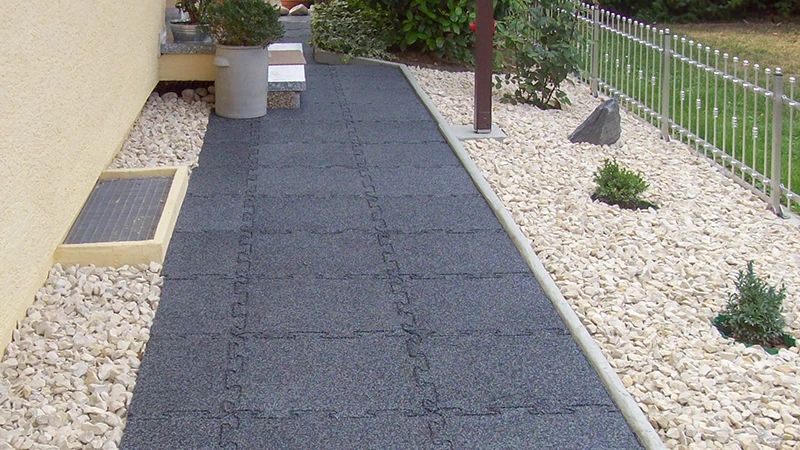
Elastic slabs made of rubber granulate ensure a clean, well-kept appearance and provide safe walking comfort in all weathers. Walking noise or the rattling of trolley cases simply does not occur on these paving slabs.
Thanks to the precise puzzle connection, an almost seamless and permanently stable path is created – ideal for gardens, front gardens or entrances.
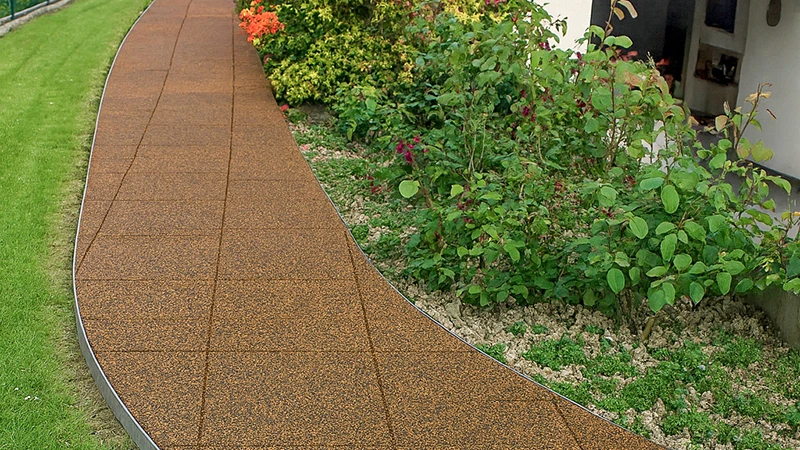
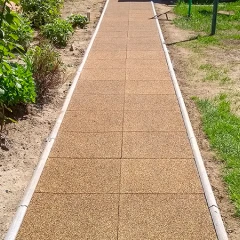
A winding garden path made of rubber paving slabs runs elegantly along the house.
The warm colour tones of the slabs harmonise with the green of the lawn and the flowering shrubs, creating a neat, inviting overall look.
Thanks to the water-permeable material, the surface remains safe and clean even in rainy weather – perfect for lasting garden paths without intensive maintenance.
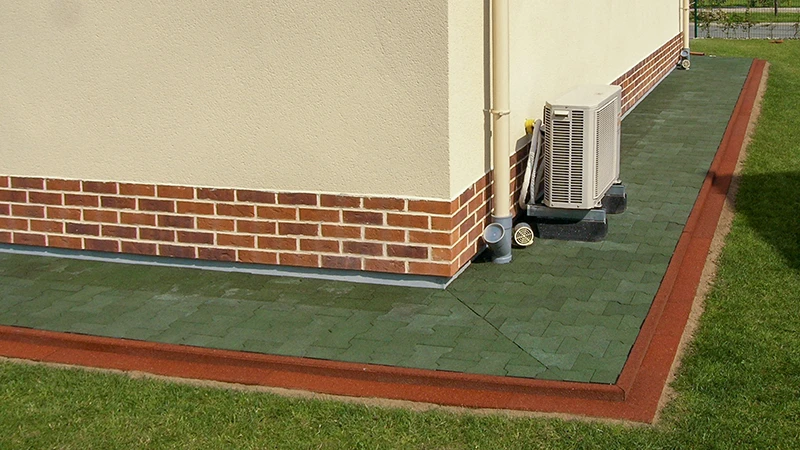
Practical & easy-care: With rubber paving slabs you can create a clean, permanently weed-free path around the house.
The almost seamless installation prevents wild growth from taking hold – this makes garden maintenance easier and creates a clear separation between lawn, bed and wall.
The result is a permanently well-kept appearance that perfectly combines functionality and aesthetics.
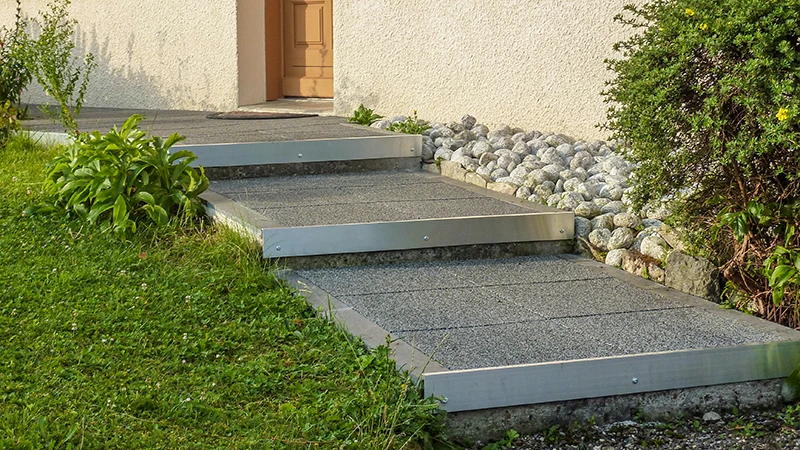
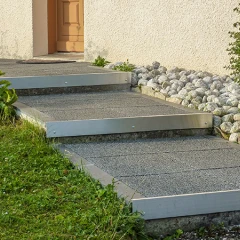
Outdoor stairs quickly become a slip hazard when wet or covered with damp leaves.
Rubber paving slabs from WARCO offer a simple solution: the grippy surface ensures secure footing without screws or adhesive. And if someone does fall, the flooring also provides impact protection.
The handy slabs can be cut to size, laid precisely and lifted again if necessary – ideal for entrances, basement steps or terrace stairs.
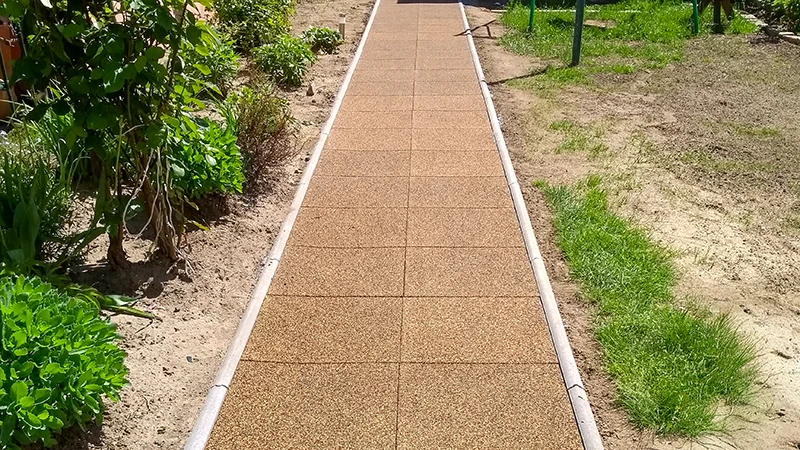
Whether garden shed, wood store or playhouse – a solid path ensures dry feet and safe footing.
With rubber paving slabs from WARCO, a stable garden path can be laid easily even on soft ground.
The elastic slabs even out minor unevenness and can be re-laid or removed at any time if required.
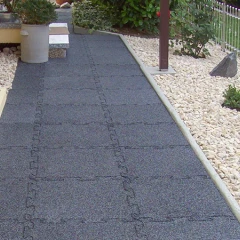
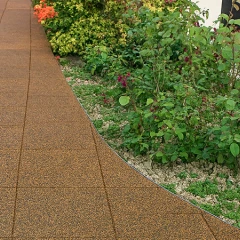
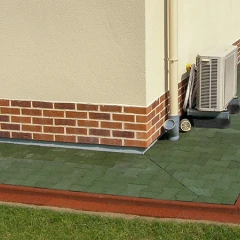
Why WARCO garden paving slabs are the better choice
- Easy to install – even on grass.
- Water-permeable and quick-drying.
- Safe in all weathers – non-slip surface.
- Frost-resistant – cannot burst, break or splinter.
- Comfortable and elastic – natural sound insulation.
- Low-maintenance, durable – resistant to plant growth.
Popular garden paving slabs in a wide choice of colours
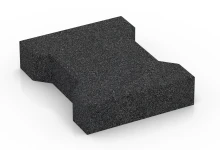
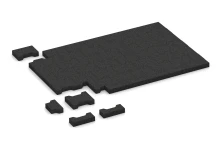
Block Paving VG


Rubber Block Paving, 20 × 16.5 cm. Interlocking Dog Bone Pavers with slip-resistant, impact-absorbing and low-noise properties. Ideal for paths, courtyards, sport & golf.
Laying garden paving slabs – here’s how
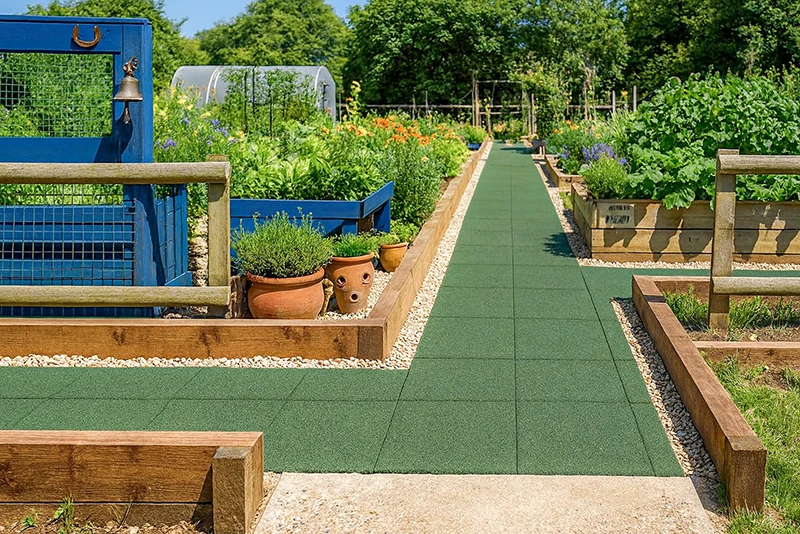
Rubber paving slabs can be laid quickly on any suitable surface. For individual stepping stones on the lawn, it is enough to remove the grass to the required depth, level the soil, add a little sand or gravel and place the slab. Thanks to their elasticity, the slabs also adapt to less than perfect ground.
For a stable garden path, it is recommended to create a proper base layer: remove the topsoil, level the surface and apply a 2–3 cm layer of gravel chippings. On top of this, ground grids (plastic honeycomb grids) are laid, interlocking with the subsoil and with each other. Filled with gravel chippings, they form the ideal base for a path made of WARCO slabs.
Plan your area – calculate the quantity
With the layout planner, you can quickly work out how many tiles or slabs you need for your project. Whether for a balcony, terrace, playground or sports area – the planner supports all slab products from the WARCO range.
Select product
Open the desired product page in the WARCO shop and click on “Plan installation” to transfer the product directly into the layout planner.Enter area
Enter the dimensions of the surface you wish to cover.Get results
The planning tool automatically calculates the required quantity, offers different laying strategies to choose from and visualises the result.

Ground grids for surface stabilisation – edging stones, palisades or block steps for garden design
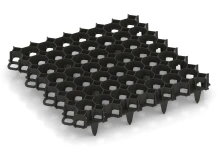
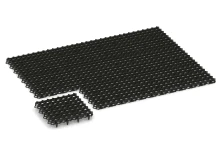
Gravel grid

47.6 × 47.6 cm = 0.226 m². Ground grid for permeable stabilisation of paths, driveways, parking spaces and as a solid base layer for rubber tiles.
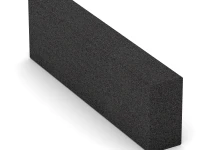
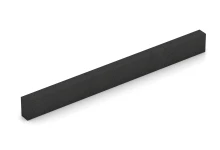
Rubber granulate block step
100 × 30 × 15 cm. Edging, rubber kerb, stair tread, slope stabilisation, wall guard, impact bumper, parking buffer.
Frequently asked questions about garden paving slabs
For individual stepping stones in the lawn, it is enough to cut out the turf at the desired spot, make the soil level and stable, and place the slab. This creates a stable and clean step.
However, if you want to create a complete garden path, a base layer is necessary. The soil is removed and levelled, then ground grids (plastic honeycomb grids) are laid and filled with gravel. On this base, paving slabs can be laid permanently and securely – direct installation in sand or gravel is not recommended.
No, rubber paving slabs are usually installed floating – without glue or screws. This keeps the flooring elastic and flexible, allows it to adapt to slight ground movement and makes it easy to remove or re-lay if necessary.
Yes. Rubber paving slabs are naturally non-slip, as the fine granulate structure forms a grippy, slightly rough surface – similar to fine gravel. They retain their slip resistance even in rain. However, if wet leaves, snow or ice lie on the surface, no slip resistance can be guaranteed, as there is no direct contact with the surface.
Rubber paving slabs are especially low-maintenance and almost maintenance-free. Coarse dirt can easily be removed with a broom or garden hose. As the slabs are generally water-permeable, puddles rarely form and fine dirt is usually washed away by rain. In addition, rubber granulate does not encourage plant growth, and ants or mice do not settle underneath, as the slabs do not provide protection from moisture.
Find more guides under the menu item Advice & planning. More information about our paving slabs can be found under Paths & driveways or Rubber paving slabs!