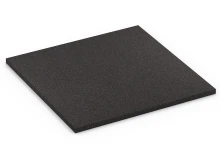
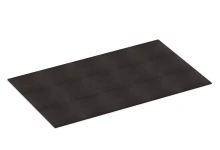
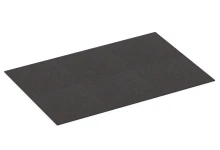
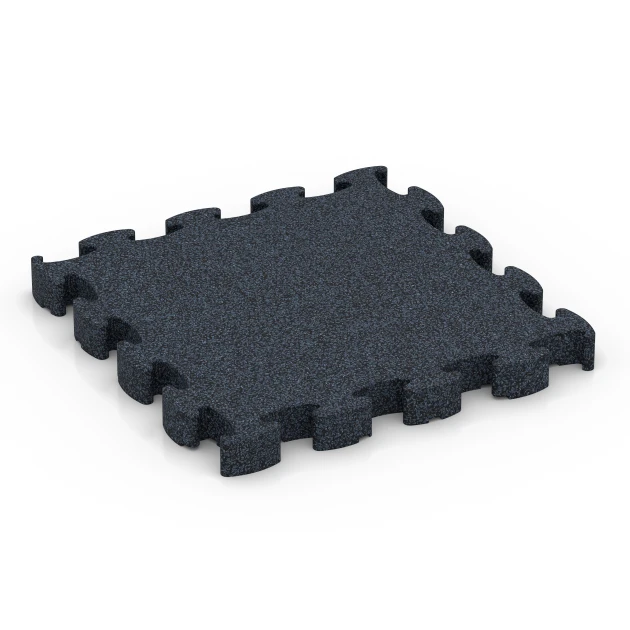
Fitness Premium Gym Flooring XT "Anthracite"
- /
-
Ready to ship
in approx. 2-3 weeks - £69.05 / 11.90 Piece / m²
- (2.02 kg / Piece)
EAN: 4251469369597 | Item no.: 6959
Fitness Premium Gym Flooring is designed for home gyms, commercial fitness rooms, free-weight zones and outdoor training areas. The resilient rubber finish provides secure footing during lifting, conditioning work and circuit training while helping reduce vibration and training noise. It stays comfortable underfoot, remains grippy in damp conditions and performs consistently indoors and outdoors.
Construction
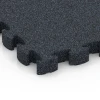
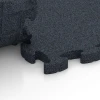
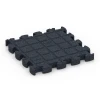
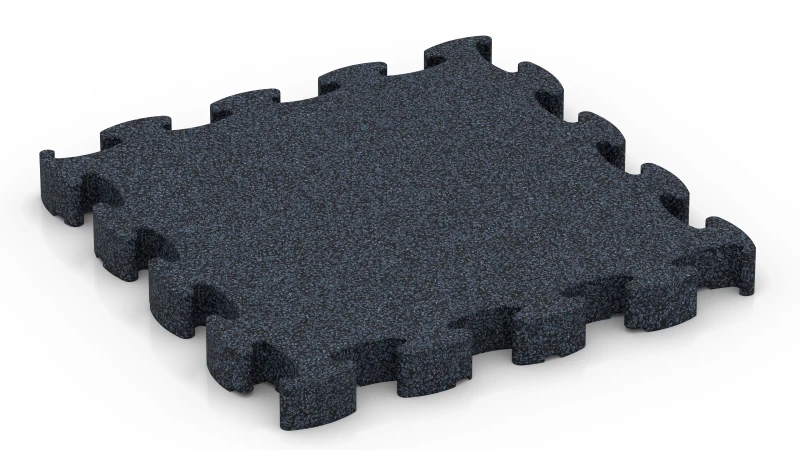
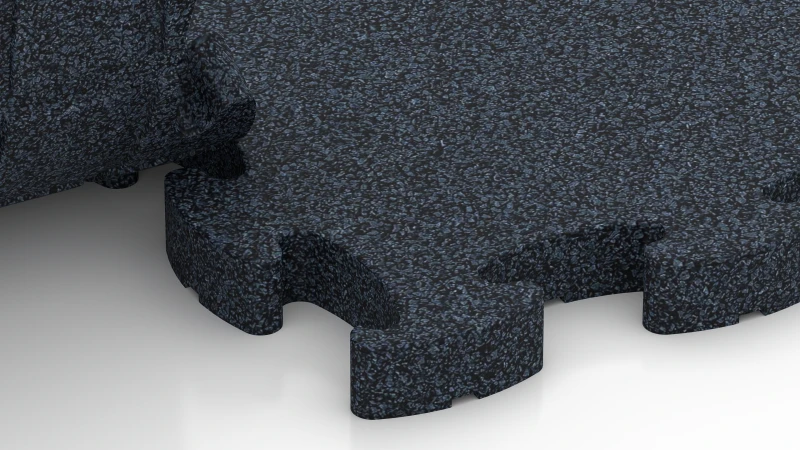
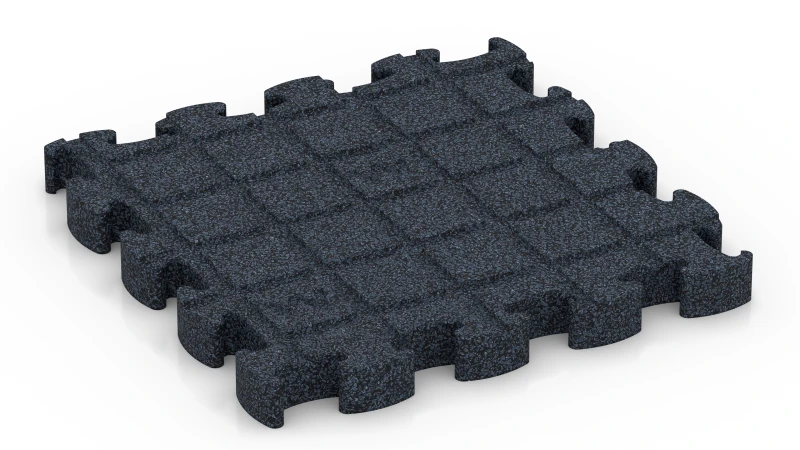
The tiles are manufactured from recycled tyre rubber granules bonded with PU binder and pressed in calibrated moulds. Precision-cut edges and the integrated jigsaw interlock create a neat layout with a tight hairline joint between tiles. Interlocking lugs along the tile edges keep the floor aligned across larger training areas and help prevent individual tiles from drifting during use. The textured finish gives larger training areas a consistent appearance. Anthracite tiles can gradually lighten through UV exposure outdoors, particularly in uncovered training areas with regular direct sunlight. This is a normal characteristic of ELT rubber.
Training comfort
The grained rubber surface provides reliable grip for weight training, cardio equipment and bodyweight exercise. The resilient build softens hard subfloors and improves comfort during longer sessions. It also helps reduce vibration from gym machines and free weights. Stretching, mobility work and barefoot exercise feel noticeably more comfortable than on hard mineral surfaces, especially in cooler conditions.
Installation
The tiles connect using a calibrated jigsaw interlock and are laid loose without adhesive on a level, load-bearing base. The close-fitting edges create a clean hairline joint and keep the floor visually even throughout the installation. Individual tiles can be lifted and replaced if needed. Standard workshop tools allow accurate cutting around walls, columns or equipment zones. The resilient rubber helps smooth out minor uneven areas in the subfloor and reduces the visibility of slight surface imperfections beneath the installation.
System options
For deeper gym floor builds, the tiles can be installed with WARCO base pad underlays using the same floating method. This combination works particularly well in free-weight areas, strength zones and outdoor training spaces where extra cushioning is required. Indoor and outdoor installations follow the same laying principle. The flooring is weatherproof, free-draining and easy to clean after daily use.


Discount
Product Highlights
Characteristics
Product Details – Material and Structure
Comparative values
Impact-absorbing flooring made from PU-bound rubber granules reduces impact sound and the structure-borne sound it generates. The elastic floor covering absorbs impacts and reduces their transfer to the substrate.
Impact sound occurs when walking, jumping, moving furniture or setting down weights cause a floor or storey slab to vibrate. These vibrations travel through solid building components as structure-borne sound and can become audible as airborne sound in other rooms.
Structure-borne sound can also be caused by machinery and by installations fixed to the building. It may have causes and transmission paths other than impact sound, so it cannot be reduced by a floor covering alone.
Under load, a floor covering made from rubber granules deforms elastically. This deformation transfers the load to the substrate less abruptly, reduces the peak force and, through the covering’s internal damping, further weakens the remaining vibrations.
Sound-insulation tiles reduce excitation of the substrate from footsteps, jumps and impacting objects. Where higher requirements apply, multi-layer flooring systems with functional layers of differing elasticity can further reduce impact transmission. Their effectiveness depends on the properties of each layer, the load applied, and the existing floor or slab structure.