Interlocking Playground Safety Tiles UZ "Grass green"
- /
-
Ready to ship
from stock in 1-3 days - £46.00 / 4 Piece / m²
- (7.00 kg / Piece)
EAN: 4251469363014 | Item no.: 6301
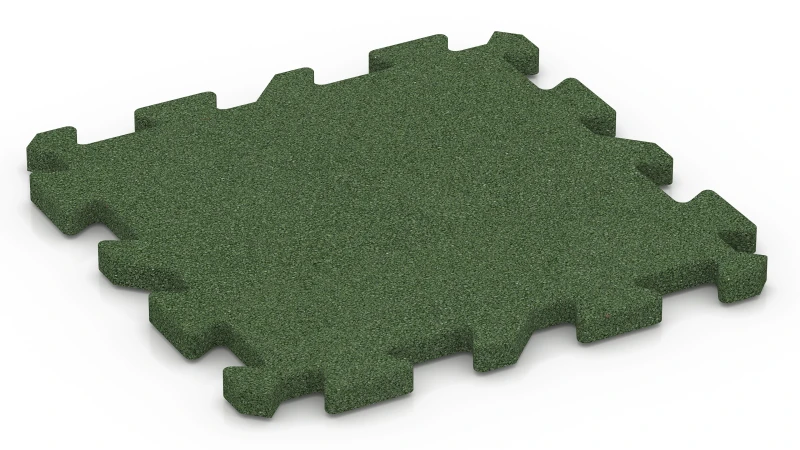
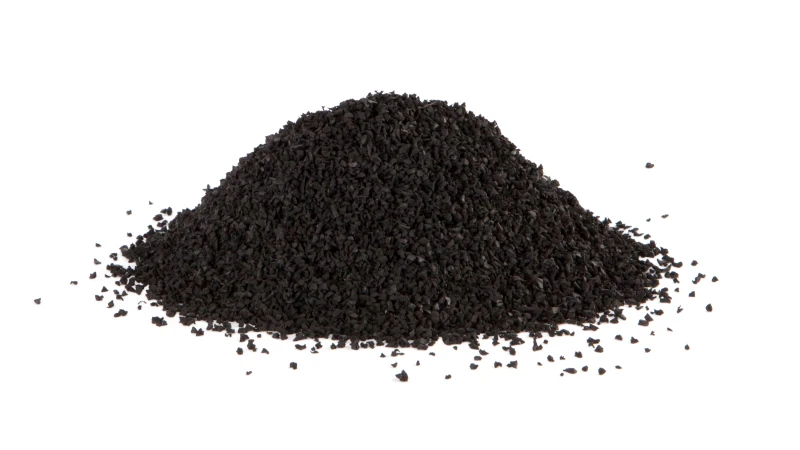
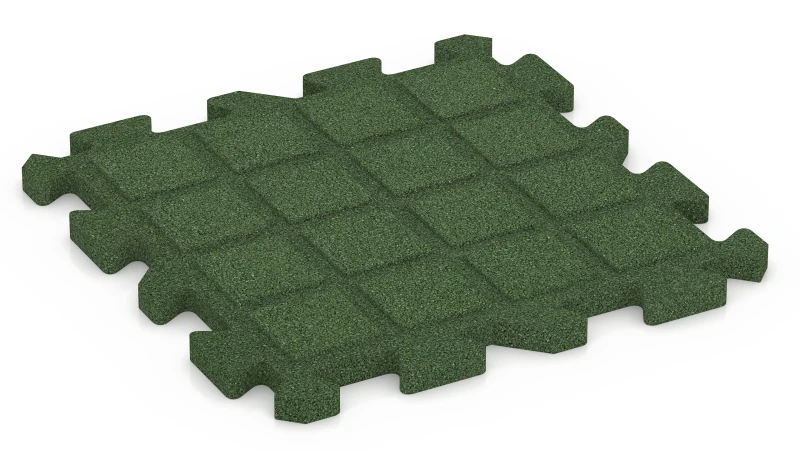
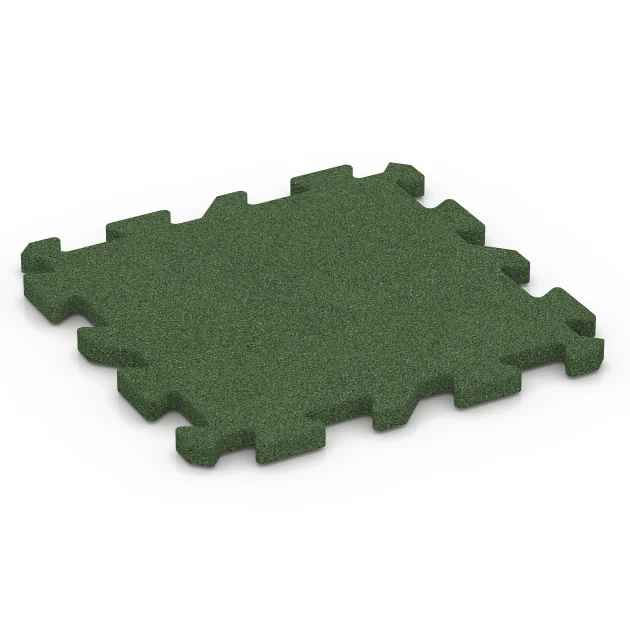
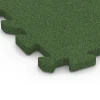
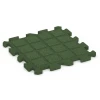
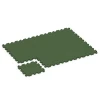
The Interlocking Playground Safety Tiles measure 50 × 50 cm and have been tested to BS EN 1177. Four thicknesses from 3 to 6 cm cover critical fall heights from 1.00 m to 2.20 m. The tiles are made from rubber granules bonded with polyurethane. The surface is slip-resistant, while the resilient tile body cushions the impact of a fall. The jigsaw interlock joins the tiles into a stable surface. It holds the surface together so firmly that edging is not usually needed.
Which thickness is suitable for which fall height?
The Interlocking Playground Safety Tiles have been tested for these critical fall heights according to thickness: 3 cm up to 1.00 m, 4 cm up to 1.50 m, 5 cm up to 1.90 m and 6 cm up to 2.20 m. The 3 cm tile is suitable for spring rockers, playhouses and toddler slides, while the middle thicknesses are suitable for standard slides, swings and climbing frames. The 6 cm tile is used beneath climbing towers, climbing walls and on fire service training areas. The tested critical fall height of the tile must be at least as high as the free height of fall of the play equipment. This value is usually shown in the equipment manufacturer’s documentation.
What can the tiles be laid on?
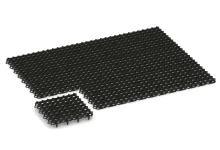
Interlocking Playground Safety Tiles can be laid directly on concrete, asphalt or block paving. On undisturbed or made ground, a load-bearing sub-base of plastic honeycomb grid filled with chippings is recommended. The honeycomb grid prevents the chippings from drifting across the area. Every sub-base must provide lasting support and be reasonably level. Water passes readily through the tiles. Drainage channels are moulded into their underside. On concrete or asphalt, water runs beneath the tiles in the direction of the slope. On the honeycomb grid, it drains into the ground below.
How are the tiles laid?
Interlocking Playground Safety Tiles are laid on the base and fitted together at their interlocking edges. To make each row finish straight at the edge, cut one tile in half for each row. Put one half at the start and the other at the end of the row, with the straight cut edge facing outwards. Cut the tiles with a circular saw or jigsaw. If a tile is damaged, lift it out and replace it with a new one.
How much maintenance do the tiles need?
Interlocking Playground Safety Tiles need very little maintenance. Loose-fill safety surfacing made from sand, gravel or wood chips becomes dirty, gradually compacts and is carried away during play. It therefore needs regular cleaning, raking and topping up. Sweep leaves and sand from the tiles with a broom. Remove stubborn dirt with a pressure washer.



Discount