Gravel Grid – Grass Grid, Ground Reinforcement Grid WG "Matt black"
- /
-
Ready to ship
from stock in 1-3 days - £13.27 / 4.42 Piece / m²
- (1.00 kg / Piece)
EAN: 4251469352070 | Item no.: 5207
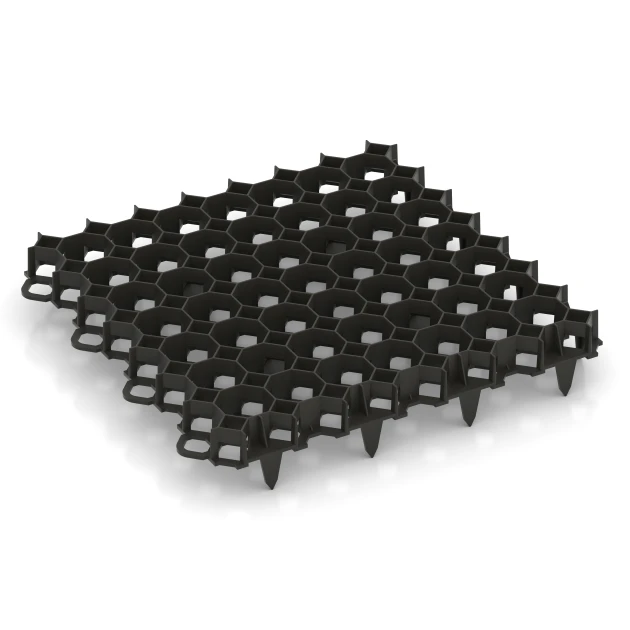
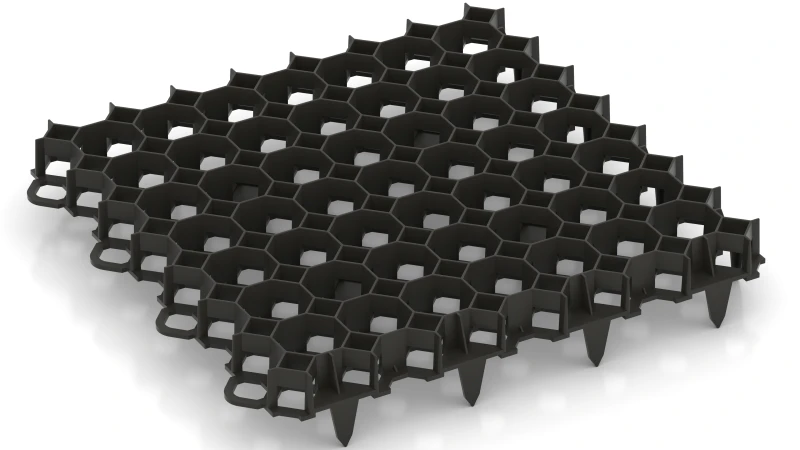
Gravel Grid is a plastic honeycomb grid for the durable, natural-looking and cost-effective reinforcement of paths, parking spaces and leisure areas. The grids are laid on a formation level. Their cells are about 4 cm high and are filled with grit, gravel or grass-growing medium. The fill and grid structure stabilise each other. Together, they carry loads and transfer them into the ground. The ground is not sealed. Rainwater can soak naturally into the subsoil.
What can Gravel Grid be used for?
Gravel Grid, a plastic honeycomb grid, can be used in many ways:
- as a gravel grid for paths, driveways or patios,
- as a grass grid for grassed areas used by vehicles or
- as a sub-base for playground safety tiles, outdoor gym tiles, patio slabs or path slabs.
Gravel Grid filled with grit supports loads of up to 400 t/m². As a ground reinforcement grid or parking grid, it is therefore suitable for cars and other motor vehicles.
Should I use a grass grid or a gravel grid?
Gravel Grid is filled halfway with grass-growing medium and sown with grass seed to create a green surface. This forms a grass grid with individual grass cells. For a gravel grid, every gravel cell is filled completely with grit or gravel. For a gravel driveway or gravel patio, add about 2 cm of gravel above the top of the grid.
How is Gravel Grid laid?
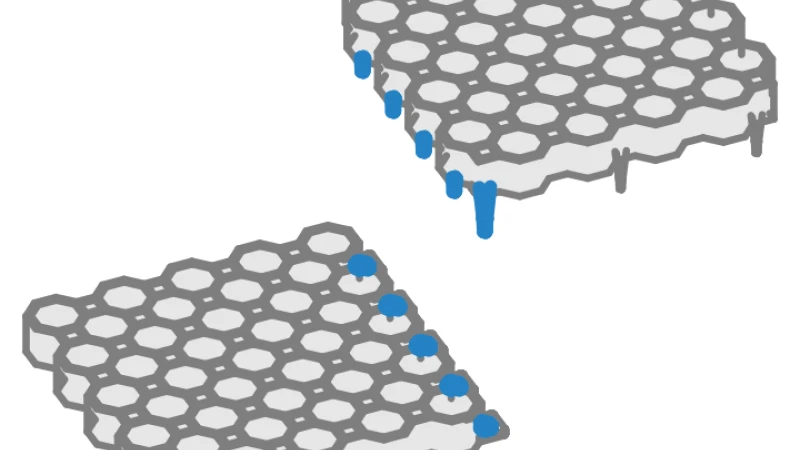
Gravel Grid can be laid with little excavation and without heavy machinery. First remove the topsoil and prepare the formation level, which is the smoothed and compacted ground beneath the grid. The grid can be laid on a thin laying course of grit or directly on the formation level. For areas subject to heavier loads, first install a sub-base of compacted crushed stone or a frost-protection layer. Then add a laying course of grit at least 6 cm thick. Ground spikes on the underside anchor the grid in the laying course and also connect the neighbouring grids.
What should I consider when laying rubber tiles?
Gravel Grid provides the best possible sub-base beneath patio slabs, path slabs and playground safety tiles made from rubber granules. A laying course of grit alone gradually gives way beneath flexible tiles, causing the surface to sink. Within the honeycomb grid, the grit remains stable. Make the grid area slightly larger than the tiled area so that the edge tiles are firmly supported too. In most cases, the area needs neither a gradient nor additional drainage.
What is Gravel Grid made from?
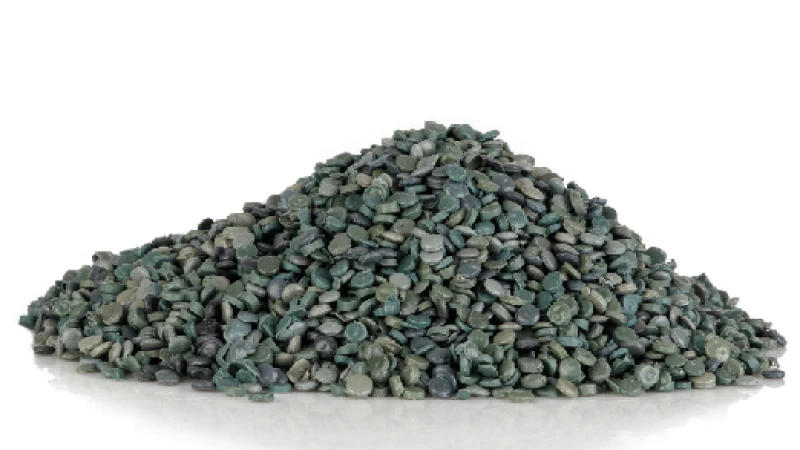
Gravel Grid is made entirely from PE and PP recovered from rejected batches of newly manufactured plastic products. The plastic contains no heavy metals or harmful substances, withstands frost and can be recycled.


Discount
Product Highlights
Product Details – Material and Structure

In terrace and path construction, the sub-base is the lowest layer of the pavement construction, between the formation level and the slab surfacing, while the embankment is the layer below the formation level.
A sub-base must be level, load-bearing and not susceptible to frost. It takes the loads from the surfacing and distributes them so that the ground can carry them.
Technically, an embankment is the built-up earth body below the formation level. Undisturbed natural ground lies beneath it. In everyday usage, the whole construction below a slab surfacing is often called the embankment. Here, the term is used in this wider sense.
Three groups of sub-base are distinguished. Unbound sub-bases consist of sand, gravel, chippings or crushed stone. They are laid in a loose state and compacted as far as practicable. Compaction increases their load-bearing capacity without binding the aggregate.
Grid sub-bases consist of gravel grids, also known as grass grids, gravel cells or plastic cellular grids. Their chambers are filled with chippings. Metal open-grid grating is another type of grid sub-base and can be found, for example, on balconies.
Bound sub-bases form a rigid, composite load-bearing layer. They include hydraulically bound sub-bases such as concrete, bitumen-bound sub-bases such as asphalt, existing surfacings such as concrete block paving, tiles, natural stone slabs, screed or parquet, and waterproofing layers such as roofing membranes. Under road construction standards, only concrete and asphalt are classified as sub-bases. Existing surfacings and waterproofing layers are not. All three groups are treated as sub-bases here because they all support rubber slabs.
The formation beneath patio slabs must be level, have adequate load-bearing capacity and be well drained. For ground-level patios, the substrate must be built to withstand frost. The precise construction depends on the type of patio slab and the existing site conditions.
For a ground-level patio, the sub-base comprises a formation with adequate load-bearing capacity and adequately compacted frost-protection and load-bearing layers. Rigid concrete or natural stone slabs are normally laid on an evenly screeded laying course of chippings. Depending on the system, ceramic patio slabs may be installed on a laying course of chippings, on adjustable pedestals or in a bonded system. Timber and WPC decking require a suitable substructure.
Patio tiles made from PU-bound rubber granules require continuous support and cannot be supported at individual points on adjustable pedestals. On sound concrete, asphalt, concrete block paving or natural stone, PU-bound rubber granule tiles can be loose-laid without a mortar bed. The existing substrate must allow water to drain at an adequate fall towards an outlet or infiltration area.
On an unpaved substrate, first create a level formation with adequate load-bearing capacity. A gravel grid laid across the full area can provide stable, water-permeable support on this formation. Fill the gravel grid cells completely with suitable chippings. Depending on substrate conditions and frost exposure, a compacted frost-protection and load-bearing layer beneath the gravel grid may also be required. A concrete slab is not required for a gravel-grid construction.
Playground safety tiles sit more evenly and remain stable for longer on gravel grids than on a loose grit bed. The honeycomb cells hold the aggregate in place, with the material contained within each individual cell. It can neither move sideways under load nor be washed out during heavy rain, so the tiled surface remains stable and safe over the years.
In a loose grit bed, the particles are broadly the same size and lack the fine material that would fill the voids. Even after compaction, the grit remains mobile. This movement is irrelevant beneath a rigid concrete slab, but an elastic playground safety tile or patio tile made from rubber granules does not spread loads evenly through the substrate. Over time, the grit may be pushed towards the tile edges. The rubber tile then loses support in the centre and sinks there, while displaced grit accumulates beneath the edges and lifts them. This pattern of damage is known as dishing.
Gravel grids are also sold as grass grids, gravel cells or plastic honeycomb grids. They turn a loose grit bed into a stable sub-base. When filling the cells, the aggregate is levelled exactly to the top edge. The contained material stays in place under load and in rain, leaving the tiled surface stable and safe. Filled grids can support up to 400 t/m², while the whole area remains water-permeable. Where the ground is permeable, a gradient and drainage are usually unnecessary.
On load-bearing ground subject to low loads, it is sufficient to remove the topsoil and lay the grids on a thin levelling layer of grit. Less excavation is required than for a conventional construction method. A sub-base of compacted crushed stone is only needed where the ground has limited load-bearing capacity, where the construction needs to be frost-proof, or where the area must carry higher loads. This limited amount of work is an argument in favour of gravel grids.
Gravel stabilisation grids can be installed as a sub-base in three ways: directly on in-situ ground, on a grit laying course over the formation, or on a crushed-stone sub-base.
The grid cells are filled with crushed, angular grit. The cells are filled to the top, and the grit is levelled flush with their upper edges.
Where the ground has sufficient bearing capacity and is only lightly loaded, installation directly on in-situ ground is sufficient. Topsoil must first be removed, and the formation must be carefully prepared. The grids are laid directly on the natural ground, allowing the 4 cm ground spikes to penetrate the soil.
A thin grit layer can be laid over the formation to even out irregularities. The ground spikes extend through this grit layer and into the formation.
Where the ground has a low bearing capacity, protection from frost effects is required, or high loads are expected, a crushed-stone sub-base must first be installed and compacted. The ground spikes cannot penetrate the compacted crushed stone. A grit layer is therefore laid over the sub-base so that the spikes are fully embedded. This grit layer must be at least 6 cm thick, and the grids must sit firmly on it.
Gravel grids are also sold as grass grids or plastic cellular grids. The grids are set into the thin grit layer, which is about 2 to 5 cm thick when used to even out irregularities.
A permeable sub-base does not generally require a slope. In technical terms, it is a water-permeable load-bearing layer through which rainwater can infiltrate naturally into the ground.
This natural infiltration costs less than artificial drainage into the surface water sewer system, is ecologically beneficial and supports both the natural water cycle and groundwater recharge. For the system as a whole to provide effective infiltration, the surface covering must have high water permeability. Rubber tiles made from PU-bound rubber granules are particularly suitable for water-permeable systems, including patio tiles, playground tiles and tiles for many other outdoor areas. Suitable surface coverings made from rubber granules achieve a water permeability of 200 litres per hour per square metre or more.
Minor irregularities in an unbound sub-base are levelled with a compactable mineral aggregate. The aggregate consists of crushed rock and contains fines. Its grading is selected to suit the required correction depth.
High areas are cut back before the aggregate is spread in the lower areas, screeded to the required height and gradient, and compacted. After compaction, flatness and falls are checked and corrected where necessary.
Sand and chippings without fines are unsuitable because they cannot be compacted sufficiently and may migrate over time. Suitable gradings for the correction depth may include 0/8 or 0/16.