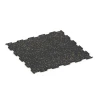
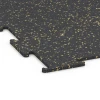
Fitness Floor Compact GZ "Light Yellow Speckled"
- /
-
Ready to ship
from stock in 1-3 days - £26.40 / 4 Piece / m²
- (2.00 kg / Piece)
EAN: 4251469364608 | Item no.: 6460
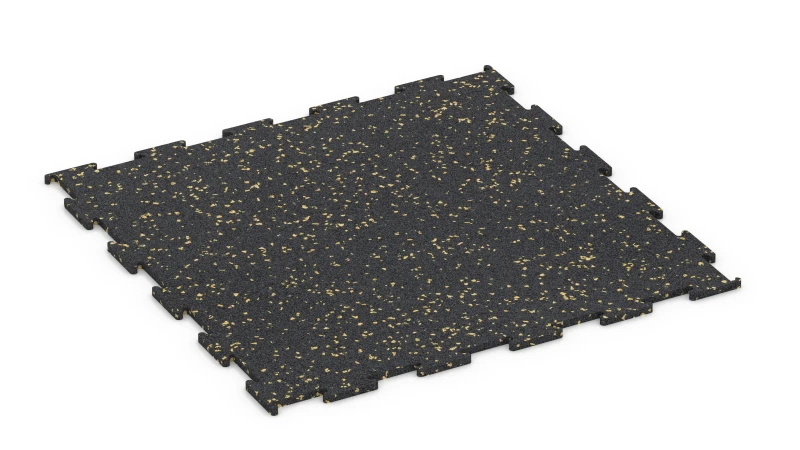
The Fitness Floor Compact is a thin rubber tile designed for indoor areas where a consistent floor appearance and straightforward maintenance are required. The dense material structure and almost closed surface result in a uniform finish with a stable level of grip. The tile is intended for spaces without specific requirements for impact absorption or joint relief and suits areas with clearly defined use.
Formats
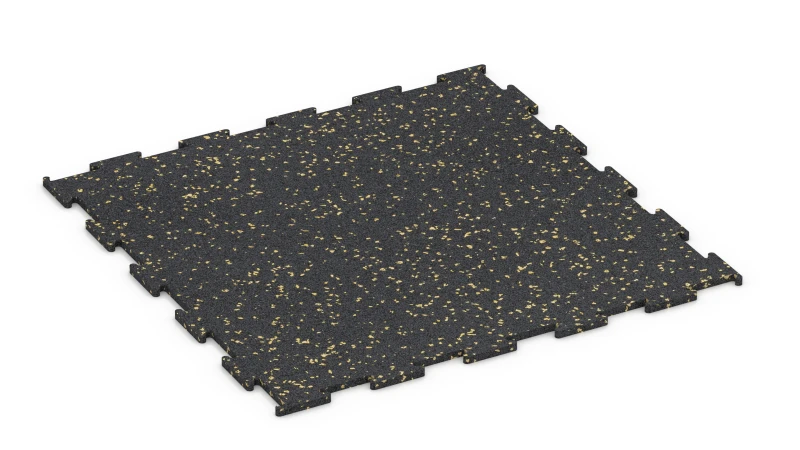
The tiles are available in 50 × 50 cm and 100 × 100 cm formats, each produced in a single thickness of 0.8 cm. This consistent specification allows for a level installation with minimal build-up height and supports straightforward planning across a range of indoor environments. The defined format range enables efficient layout and a consistent visual result. The two available tile formats do not interlock with each other, so a single format is used throughout each continuous area.
Manufacture and structure
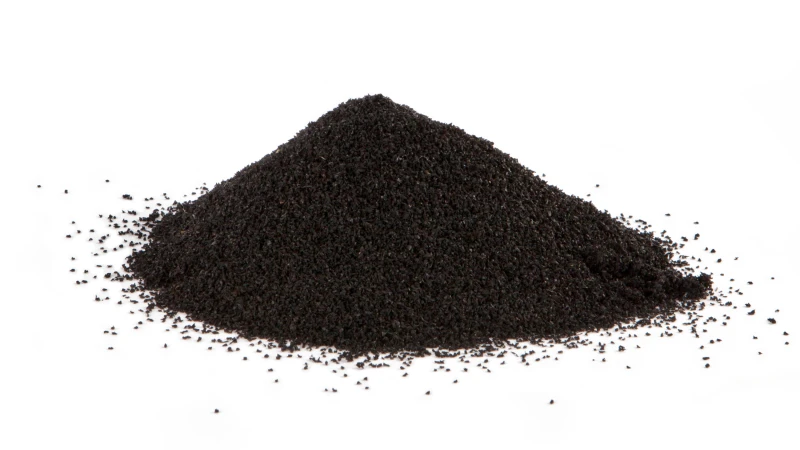
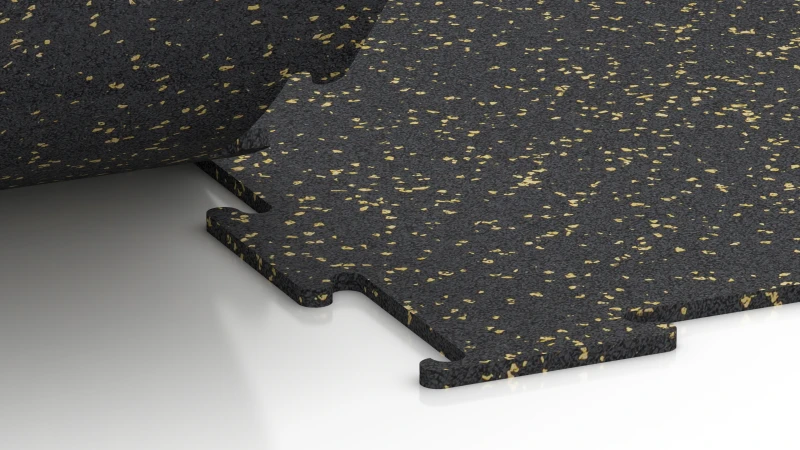
The tiles are manufactured from PU-bonded ELT rubber granulate. After pressing, curing and cooling, the interlocking puzzle profile is precisely cut into the tile edges. This process defines the final dimensions and results in calibrated tiles with a high degree of dimensional accuracy. The surface is highly compacted, producing an almost closed structure that is largely resistant to water ingress and provides a uniform, slightly textured finish.
Interlocking edge without chamfer
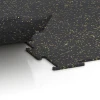
The tiles feature a precisely cut interlocking puzzle edge without chamfer. When laid, the elements align closely and form narrow, hairline joints that are barely visible in use. With solid colour finishes, the joints may appear as a fine linear pattern, contributing to a consistent and ordered floor appearance without pronounced gaps.
Applications
The Fitness Floor Compact is suited to cardio areas, changing rooms, lounge zones and private home gyms. Its reduced thickness and high level of compaction result in a firmer surface compared to thicker rubber tiles, making it appropriate for areas where stability and a controlled surface feel are required rather than pronounced cushioning. It is not intended for training zones that require enhanced shock absorption or joint protection.
Cleaning and durability
The almost closed surface limits the penetration of moisture and dirt, allowing routine cleaning by vacuuming or damp mopping. The dense structure resists surface wear under regular indoor use, and the material retains its functional properties with minimal maintenance.



Discount
Product Highlights
Characteristics
Product Details – Material and Structure
Comparative values
The number of tiles required for an irregular area can be calculated manually or determined using the digital laying planner.
For irregular areas, a scaled laying plan on graph paper is recommended. For the manual calculation method, draw the area on graph paper at a scale of 1:100, where 1 cm corresponds to 1 m. Place the tile grid over the drawing and draw the tiles within the area according to their laying dimensions. The drawing shows where offcuts will be required and allows the required number of tiles to be counted.
The online laying planner determines the quantity required more quickly than the manual calculation method. It is available for every product in the online shop. Once the area dimensions have been entered, the tool automatically calculates the number of tiles required and displays a suitable laying pattern. On the product page, simply click ‘Plan installation’. The planner works directly in the browser, is free of charge and does not require registration.
Installation of many WARCO rubber tiles can be carried out without a specialist contractor.
WARCO rubber tiles can be used as flooring for patios and balconies, as fitness flooring and as playground safety surfacing. This requires the product, substrate and build-up to be appropriate for the intended application.
The tiles are loose-laid. Depending on the range, they are joined using a puzzle-style interlock or plastic connectors.
Preparation of the substrate and any necessary edge cutting can be managed with practical DIY skills.