
Base Layer CL 3 XX "Anthracite"
- /
-
Ready to ship
in approx. 3-4 weeks – production yet to start - £34.44 / 3.70 Piece / m²
- (4.75 kg / Piece)
EAN: 4251469364837 | Item no.: 6483
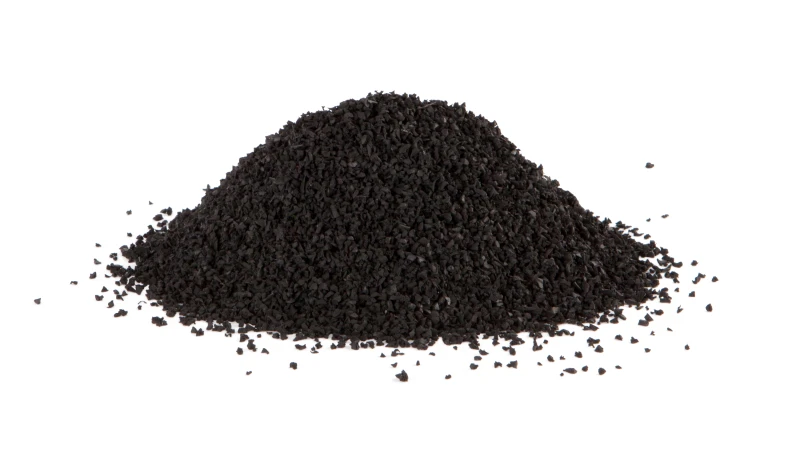
Base Layer CL 3 is a resilient underlay made from PU-bound rubber granules, developed for applications where controlled deformation and effective impact absorption are required. Used beneath a surface layer, it forms part of a modular system that can be adapted to different load scenarios in both indoor and outdoor environments.
Resilient and shock-absorbing
With its comparatively low density, this layer provides pronounced elasticity under load. It absorbs impact energy and reduces transmitted forces into the substrate. The material compresses under point loads and recovers after unloading, supporting a balanced interaction between surface layer and substructure.
Build height as required
The system height can be configured by stacking individual layers. This allows the overall construction to be adapted to installation conditions, transition heights or specific functional requirements. Each additional layer increases deformation capacity while maintaining a stable, continuous surface when combined with the top layer.
Combining damping classes
Different damping classes can be combined within one construction. This enables targeted adjustment of mechanical behaviour across an area, for example where varying levels of compliance are required. The interaction of layers creates a defined response under load without changing the surface material.
Staggered installation
Installation is carried out in a staggered pattern. The panels are laid butt jointed on a prepared substrate without mechanical fixing or adhesive. Offsetting the joints distributes loads and supports an even surface. The system remains demountable and can be adjusted or extended if required.
Advantages of sandwich construction
In a sandwich configuration, the damping layer works together with the surface layer to separate functional requirements. The upper layer defines wear behaviour and surface characteristics, while the base layer controls deformation and energy absorption. This separation allows each layer to perform its function consistently within the system.
System depths
1.8 cm – surface layer 1.8 cm
2.8 cm – surface layer 2.8 cm
3.6 cm – surface layer 1.8 cm + UL 1.8 cm
4.6 cm – surface layer 2.8 cm + UL 1.8 cm
5.6 cm – surface layer 2.8 cm + UL 2.8 cm
6.4 cm – surface layer 1.8 cm + UL 2.8 + UL 1.8 cm
7.4 cm – surface layer 1.8 cm + UL 2.8 + UL 2.8 cm
8.4 cm – surface layer 2.8 cm + UL 2.8 + UL 2.8 cm
9.2 cm – surface layer 1.8 cm + UL 2.8 + UL 2.8 + UL 1.8 cm
10.2 cm – surface layer 1.8 cm + UL 2.8 + UL 2.8 + UL 2.8 cm
11.2 cm – surface layer 2.8 cm + UL 2.8 + UL 2.8 + UL 2.8 cm
The modular structure allows system heights to be configured in defined increments. This ensures compatibility with adjacent constructions and enables consistent performance across different installation scenarios.


Discount
Product Highlights
Characteristics
Product Details – Material and Structure



Comparative values
Razredi blaženja kažejo, katere gumijaste plošče močneje blažijo in katere prenesejo večje obremenitve: razred 1 ima največjo nosilnost, razred 3 najmočnejše blaženje, razred 2 pa je vmes. Čim močneje plošča blaži, tem bolj se pod obremenitvijo tudi ugrezne.
Razred 1 ima največjo nosilnost in najmanjše blaženje. Pod obremenitvijo se najmanj ugrezne, velike točkovne obremenitve porazdeli, tresljaje pa blaži. Namenjen je izključno notranjim prostorom.
Za notranje in zunanje prostore je primeren razred 2: nosilnost in blaženje sta srednja, pod nogami pa je zmerno prožen. Navadno se polaga pod obloge teras in balkonov, pod plošče na poteh ali pred vhodi. Razred 3 ima najmanjšo nosilnost, vendar najmočnejše blaženje; pod obremenitvijo se najbolj ugrezne in absorbira največ udarne energije. Uporablja se tam, kjer mora biti talna obloga prožna in blažiti zvok; primeren je za notranje in zunanje prostore.
Vsi trije razredi so na voljo v formatih 52 × 52 cm in 104 × 104 cm ter v debelinah 1,8 cm in 2,8 cm.
Im Freien können Funktionsplatten der Klassen 2 und 3 unter einem Bodenbelag aus Gummiplatten verwendet werden. Klasse 1 ist nur für den Innenbereich vorgesehen.
Die Klasse bestimmt, wie tragfähig und wie stark dämpfend der Bodenaufbau ist. Klasse 2 verbindet Tragfähigkeit mit Trittelastizität. Sie ist die übliche Wahl unter Terrassenbelägen, Balkonbelägen und Wegplatten sowie in Eingangsbereichen. Klasse 3 kommt dort zum Einsatz, wo vor allem Stoßdämpfung gefragt ist, etwa unter einem Spielplatzbelag.
Beide Funktionsplatten bestehen aus ELT-Gummigranulat. Sie sind frostbeständig und flächig wasserdurchlässig. An der Unterseite befinden sich quadratische Auflagepads mit breiten, flachen Drainagekanälen. Dadurch kann Regenwasser auf wasserundurchlässigen Untergründen unter dem Bodenbelag ablaufen, statt sich im Aufbau zu stauen.
Im System XT ist der Bodenaufbau mindestens 1,8 cm hoch. Eine feste Maximalhöhe gibt es nicht, weil die Zahl der übereinanderliegenden Platten nicht begrenzt ist.
Oben liegt immer eine Belagplatte vom Typ XT. Ohne Funktionsplatte ist der Bodenaufbau einlagig. Mit einer oder mehreren Funktionsplatten vom Typ XX darunter entsteht ein mehrlagiger Sandwichaufbau. Belagplatten und Funktionsplatten sind jeweils 1,8 oder 2,8 cm dick. Funktionsplatten beider Dicken lassen sich in beliebiger Zahl miteinander kombinieren.
Die Aufbauhöhe ergibt sich aus der Summe aller Plattendicken. Durch die Kombination von 1,8 und 2,8 cm entstehen fein abgestufte Aufbauhöhen. Auch bei gleicher Aufbauhöhe sind verschiedene Plattenkombinationen möglich. Sie können sich in Tragfähigkeit und Dämpfung unterscheiden. Welche Kombination passt, richtet sich nach dem Einsatzzweck.
Različne vrste gumenih plošč lahko polagamo v več plasteh eno na drugo. Funkcijske plošče tipa XX so na voljo v treh razredih blaženja. Pod zaključno ploščo jih lahko kombiniramo v poljubnem številu plasti in vrstnem redu, posamezne funkcijske plasti pa se lahko med seboj razlikujejo po razredu blaženja, gostoti in debelini.
Sestav zaključuje plošča tipa XT ali druga zaključna plošča, ki se lahko od funkcijskih plošč razlikuje po gostoti in elastičnosti. Vrstni red plasti izberemo glede na namen površine in želeni učinek. Z izbiro in razporeditvijo plasti lahko uskladimo blaženje udarcev, nosilnost in porazdelitev točkovnih obremenitev. Enako debeli sestavi se tako lahko razlikujejo po nosilnosti, elastičnosti in blaženju.
Pri polaganju gumijastih plošč v več plasteh fuge zamaknemo, da v zgornji plasti niso neposredno nad fugami v spodnji. Plošče vsake naslednje plasti so zamaknjene glede na plošče pod njimi in prekrivajo fuge spodnje plasti.
Tako fuge ne potekajo neprekinjeno skozi celotno oblogo, kar pripomore k enakomerni površini. Na prostem zamik obenem prekine možnost, da bi rastline iz podlage skozi fuge prerasle vse plasti.
Bei einem mehrschichtigen Bodenaufbau, also einem Sandwichsystem, wird bei abgenutzter Oberfläche meist nur die obere Belagplatte erneuert. Die darunterliegenden Funktionsplatten haben in der Regel eine deutlich längere Lebensdauer und müssen deshalb erst viel später ausgetauscht werden.
Abnutzung und Abrieb betreffen vor allem die Nutzschicht, auf der gegangen, trainiert oder gespielt wird. Direkte Sonneneinstrahlung und Abrieb an der Oberfläche erreichen die Funktionsplatten darunter nicht. Deshalb können sie meistens weiterverwendet werden.
Weil nur die Belagplatte ausgetauscht wird, fallen die Kosten deutlich geringer aus als bei einer vollständigen Erneuerung des Bodenbelags. Beim Austausch kann eine Belagplatte in einer anderen Farbe eingesetzt werden. So ist ein Farbwechsel möglich, ohne den gesamten Bodenbelag neu verlegen zu müssen.
Obložne in funkcijske plošče različnih mer lahko v talnem sestavu polagamo v več slojih, niso pa zasnovane tako, da bi se pri polaganju natančno pokrivale.
Pokrivna mera obložne plošče, torej mera, ki jo plošča pokrije v položenem stanju brez fug, znaša 44,6 × 44,6 cm oziroma 97,1 × 97,1 cm. Funkcijska plošča ima format 52 × 52 cm oziroma 104 × 104 cm. Polaga se brez zaskočnega spoja, na tesen stik; njena pokrivna mera je zato enaka formatu plošče.
Ker sta rastra polaganja različna, so fuge obeh slojev med seboj zamaknjene, kar je tudi predvideno: fuge tako ne potekajo skozi oba sloja v isti liniji.
Potrebno količino izračunamo za vsak sloj posebej. Površina, ki jo oblagamo, je pri obeh slojih enaka, število plošč pa je odvisno od pokrivne mere plošč v posameznem sloju.